Last reviewed October 2026.
Pasadena's stormwater ordinance and new concrete
Rain that lands on concrete doesn't soak in. It runs off, picks up whatever is on the surface, and heads for the nearest catch basin. Pasadena's storm drain system is large: Pasadena Now, covering the launch of the City's stormwater compliance website in 2026, described more than 140 miles of pipe, 1,351 catch basins and 1,700 manholes. Chapter 8.70 of the Municipal Code, Stormwater Management and Discharge Control, governs what may go into it.
For a homeowner, that touches concrete work in two ways: during construction, when concrete washout, slurry and dust must stay out of the gutter, and afterward, when a bigger driveway or patio changes how much water leaves the lot.
Low Impact Development: what is and isn't confirmed
Low Impact Development, or LID, asks larger projects to retain, infiltrate or treat rain on site. Whether a residential driveway, patio or ADU project in Pasadena crosses the line into formal LID requirements depends on how much new or replaced impervious surface it adds. That square-footage trigger wasn't confirmed for this guide.
| Project | Adds impervious surface? | What to ask the City |
|---|---|---|
| Replace a driveway at the same size | No net change | Construction practices only |
| Widen a driveway or add a parking pad | Yes | Does the added area trigger LID review? |
| Patio replacing lawn | Yes | Size threshold; drainage plan |
| Pool deck or new pool | Yes | Size threshold; pool discharge rules |
| ADU with new slab, roof and walks | Yes, often the most | Whether the project as a whole needs LID measures |
Swipe the table sideways to see every column →
A planning summary, not a City determination.
Practical ways to keep rain on a Pasadena lot
Even where no formal requirement applies, the same ideas make a slab drain better and keep water away from the house:
- Slope patios and walks toward lawn or planting beds rather than toward the driveway or street
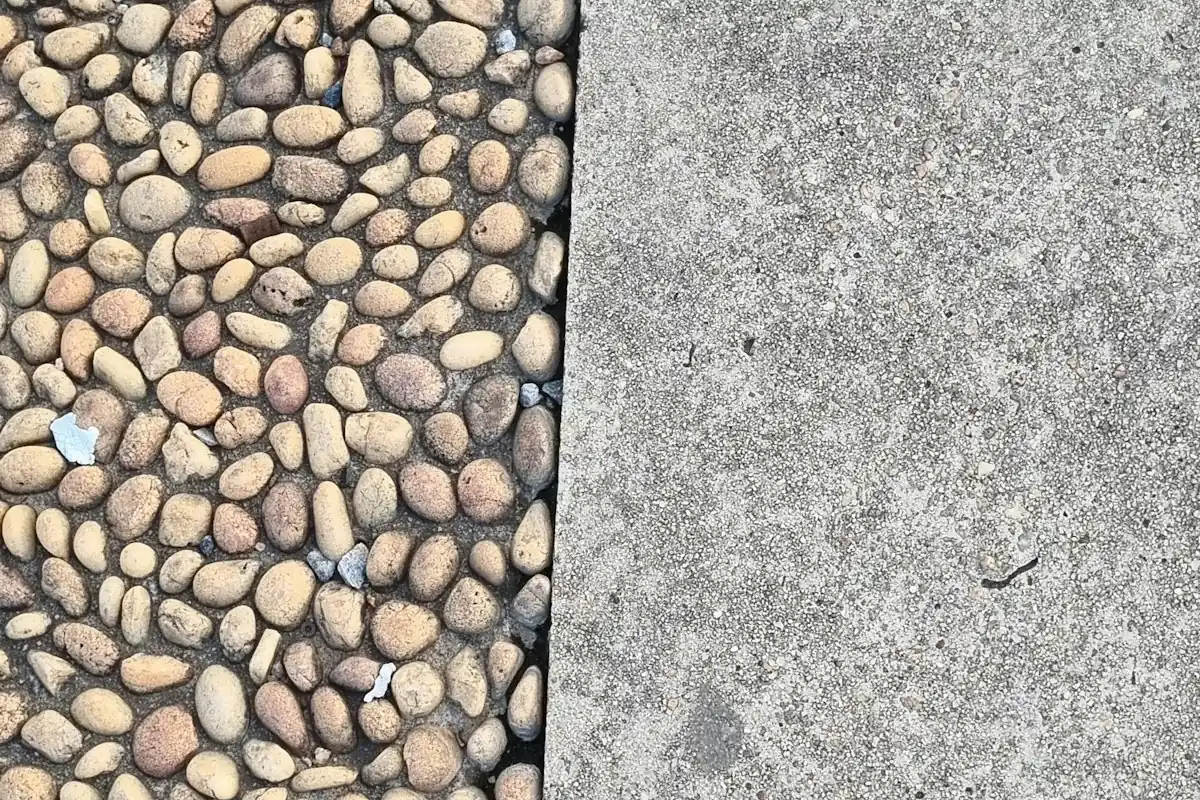
- Add a gravel or river rock strip along a slab edge where water can soak in
- Send downspouts to planted areas instead of onto the driveway
- Break up a large paved area with planters or a permeable section
- Consider permeable pavers or pervious concrete for parking pads on a deep gravel base
- Keep concrete washout, saw-cut slurry and dust out of the gutter during the job
Pervious concrete and permeable pavers
Pervious concrete leaves out most of the sand so water drains straight through, and permeable pavers do the same with open joints. Both need a deep, open-graded gravel base to hold the water while it soaks in, and both need occasional vacuuming so the pores don't clog. On most Pasadena homes, sending runoff from an ordinary slab into landscaping gets most of the benefit for less.
Pools
The City's stormwater site also covers pool discharge rules, which apply when a pool is drained, separate from the deck. See the concrete pool deck page for deck drainage.
Related: concrete driveways, concrete patios and ADU foundations in Pasadena.