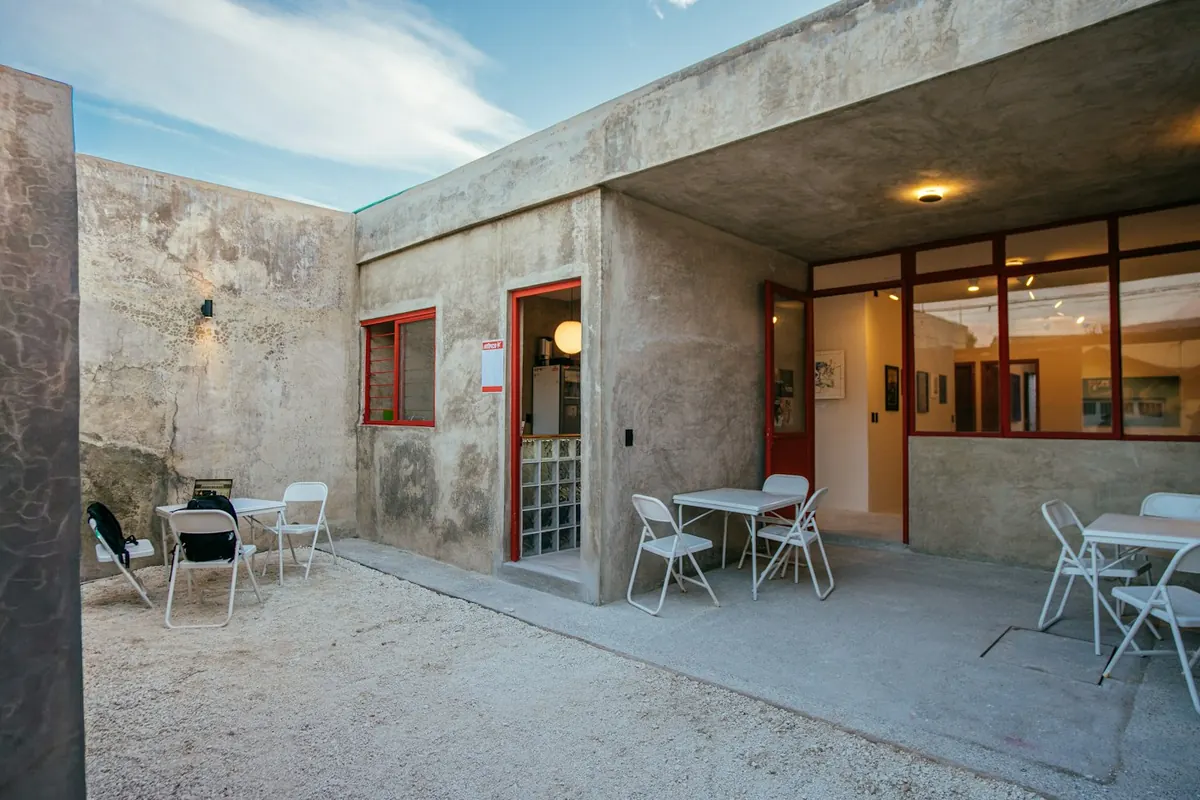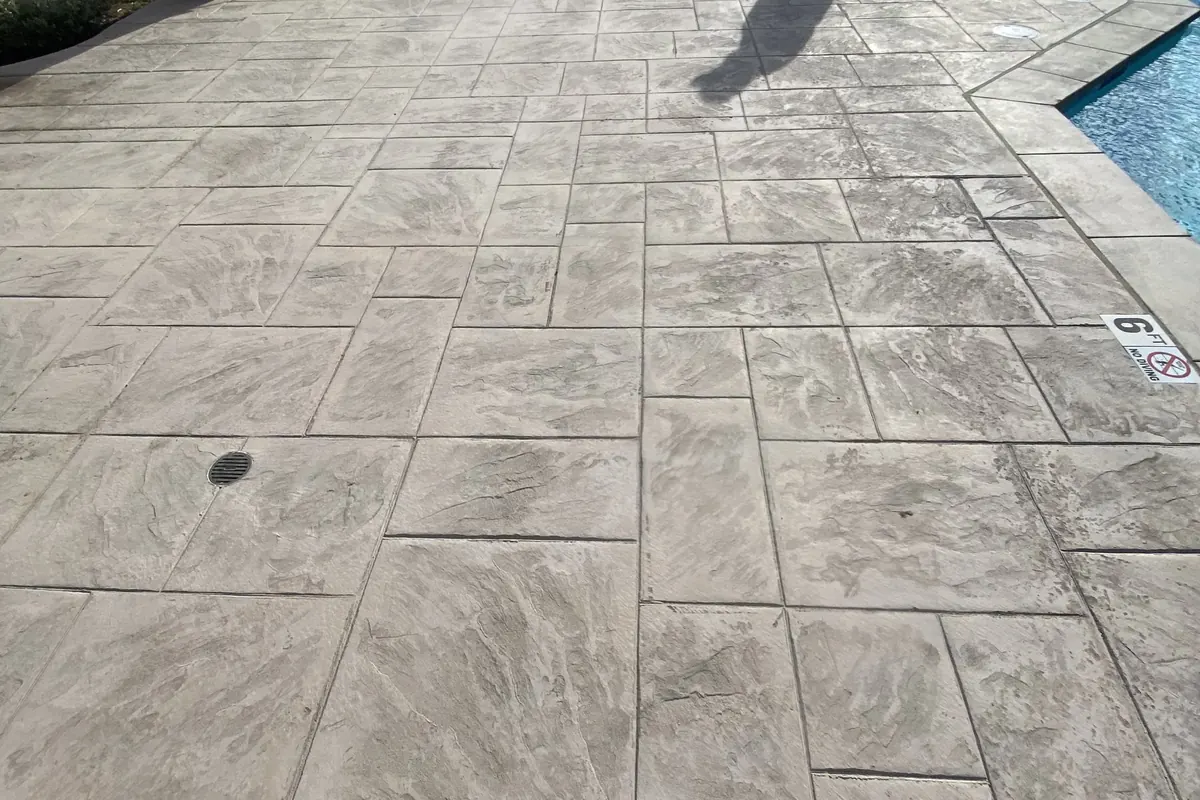
Stamped concrete for Pasadena homes
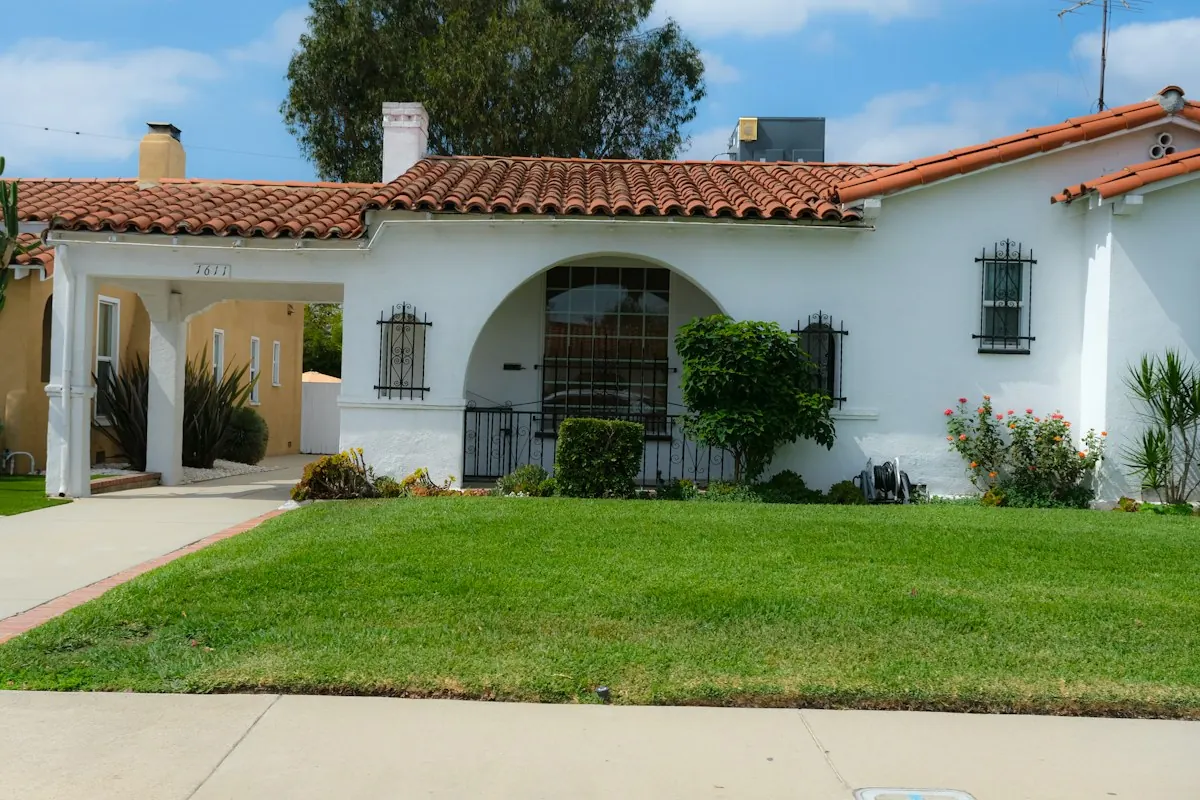
Stamped concrete is ordinary reinforced concrete, colored and pressed with patterned mats while it is still soft, so the finished slab looks like stone, brick or tile. It is popular in Pasadena for a simple reason: so many houses here were built with real materials worth echoing. A slate pattern in warm gray sits well beside a Craftsman's river rock and shingle; a terracotta tile or cobble pattern picks up the roof of a Spanish Revival house.
Most stamped work here goes on patios, front walks, pool decks and courtyards. It also goes on driveways, poured at driveway thickness, where the pattern needs to stand up to turning tires.
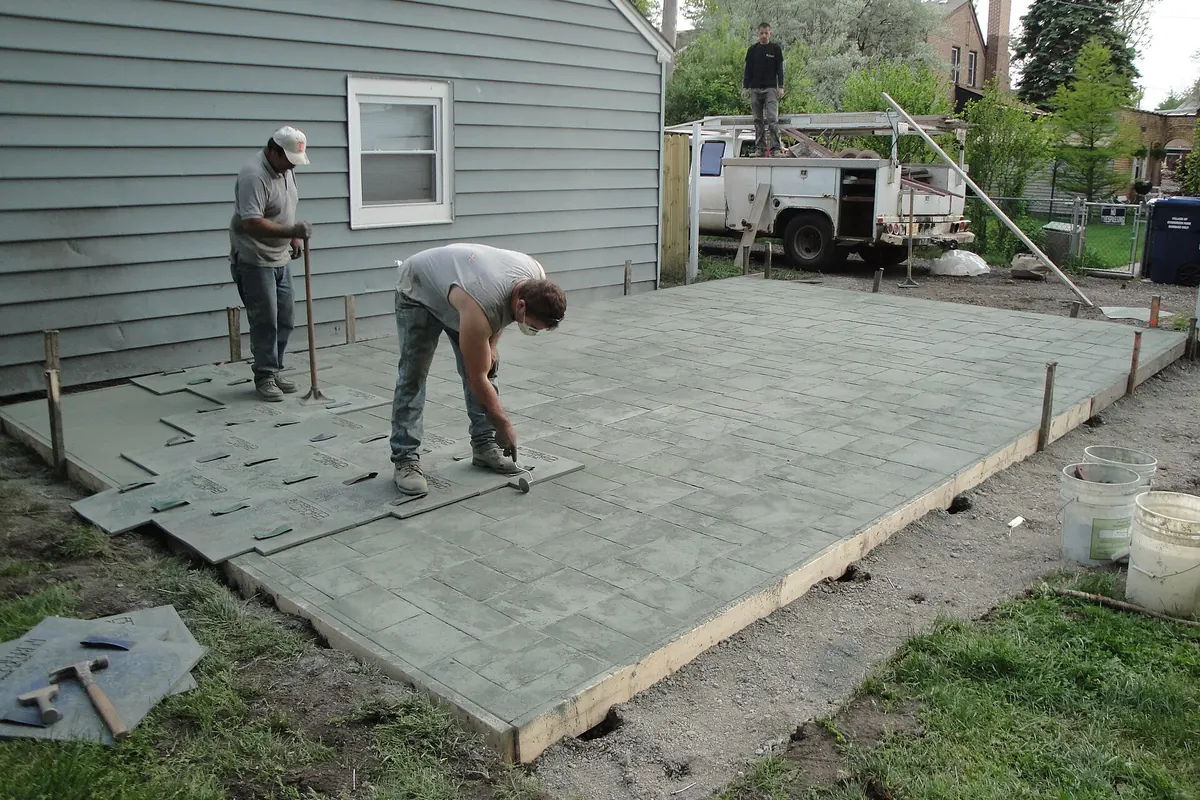
Stamped concrete patterns and colors
| Pattern | Looks like | Fits |
|---|---|---|
| Ashlar slate | Rectangular cut stone in mixed sizes | Patios, walks, Craftsman and modern homes |
| Random flagstone | Irregular natural stone | Garden patios, pool decks |
| Brick (running bond or herringbone) | Clay brick pavers | Borders, walks, driveway aprons |
| Cobblestone | Rounded European cobbles | Courtyards, Spanish Revival entries |
| Spanish or saltillo tile | Square terracotta tile | Patios beside clay tile roofs |
| Wood plank | Weathered boards | Borders and accents |
Swipe the table sideways to see every column →
How the color gets in
There are two layers of color. The base color is mixed into the concrete at the plant or broadcast onto the fresh surface as a color hardener. The accent color comes from the release agent, which collects in the low spots and grout lines and gives the slab depth. A border in a contrasting color, often a brick band around a slate field, frames the pattern and hides the edge of the mats.
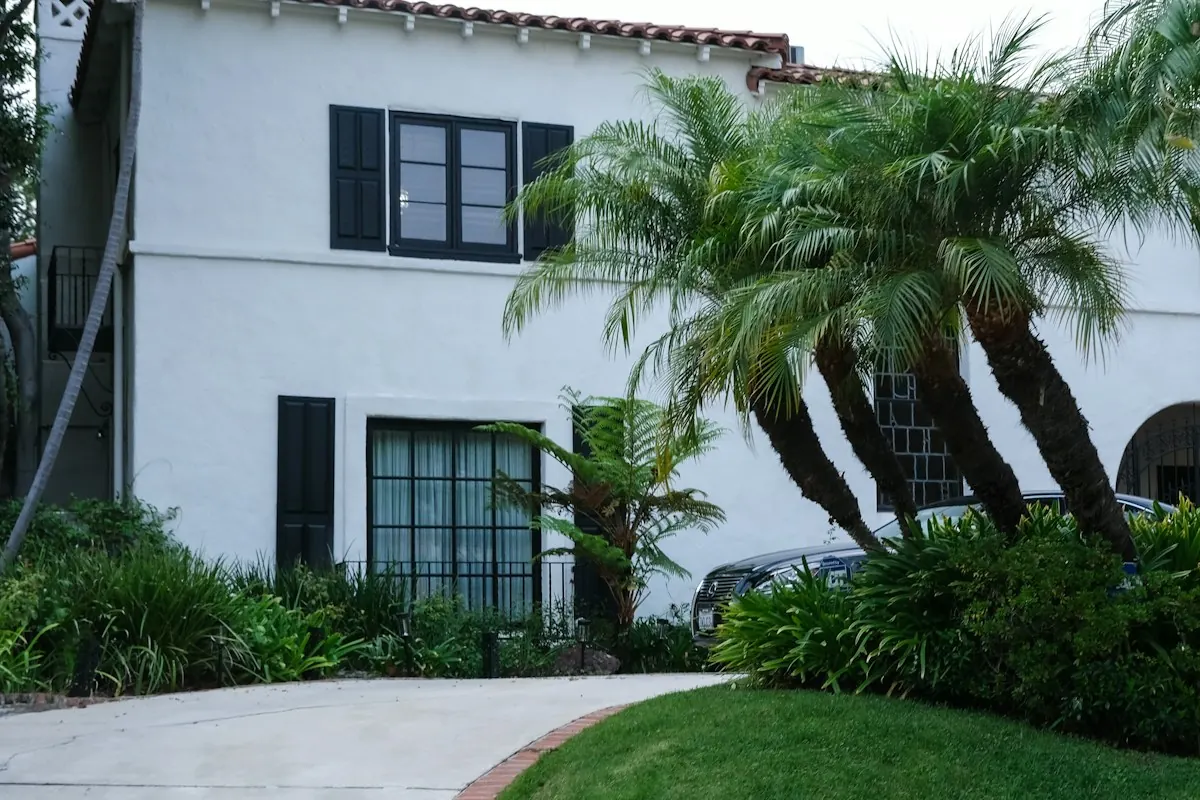
How stamped concrete is made
Stamping is a race against the concrete setting. The mats go on in a set order while the surface is firm enough to hold a pattern and soft enough to take one, which is why stamped jobs are usually poured early in the day and in manageable sections.
- 1Place and strike off
The slab is formed, steel is set, and concrete is placed and struck off flat, the same as a plain slab.
- 2Color
Color either comes mixed into the concrete from the plant or is broadcast onto the fresh surface as a color hardener and floated in.
- 3Release agent
A powder or liquid release goes on so the mats don't stick. A contrasting release leaves darker tones in the grout lines, which gives the antique look.
- 4Stamp
Rigid mats are laid in sequence and tamped into the surface while it is still workable. Flexible texture skins finish the edges and corners the big mats can't reach.
- 5Joints, wash and seal
Control joints are cut, often along pattern lines so they disappear. After curing, the extra release is washed off and the surface is sealed.
Stamped concrete cost in Pasadena
Stamping costs more than a broom finish because it adds color, mats, a second crew member on the mats and a sealer. constructlytools' 2026 Los Angeles figures, worked out for common sizes:
| Size | Plain, reinforced | Stamped, reinforced |
|---|---|---|
| 7 x 7 ft | $392 to $735 | $735 to $980 |
| 12 x 14 ft | $1,344 to $2,520 | $2,520 to $3,360 |
| 10 x 20 ft | $1,600 to $3,000 | $3,000 to $4,000 |
| Per sq ft | $8 to $15 | $15 to $20 |
Swipe the table sideways to see every column →
Computed from constructlytools' 2026 Los Angeles rates of $8 to $15 per sq ft plain and $15 to $20 per sq ft stamped. Decorative finishes in general, including exposed aggregate, run $12 to $20 per sq ft. Quotes vary by site.
What moves a stamped price: the number of colors, a border, the pattern (smaller units mean more detailing), steps and curves, and the sealer. The Pasadena patio cost page has more sizes.
Stamped concrete vs pavers
Both give a patterned surface; they are built differently. Pavers are individual units laid on a sand and gravel bed with edge restraints. Stamped concrete is one reinforced slab. The trade-offs:
| Stamped concrete | Pavers | |
|---|---|---|
| Build | One poured, reinforced slab | Units set on a sand and gravel bed |
| Cracks | Controlled with joints | Joints between every unit |
| Repair | Patch, recolor, reseal | Lift and reset single units |
| Weeds | None through the slab | Can grow in sand joints |
| Upkeep | Clean and reseal every few years | Re-sand joints, reset settled units |
Swipe the table sideways to see every column →
Keeping stamped concrete looking new
- Seal it: a sealer protects the color and brings out the pattern; reapply every few years, sooner on driveways.
- Add grip: on pool decks, steps and slopes, ask for a non-slip additive in the sealer.
- Clean gently: mild cleaner and a soft brush or low-pressure rinse; strong acids can strip color.
- Deal with faded work early: recoloring and resealing is far cheaper than a new pour. The repair and resurfacing page covers it.
Stamped concrete around water belongs on the pool deck page, where texture and heat matter as much as the pattern.